
Ragi and Oats for Weight Loss Which Is Healthier for Indian Snackers
- Prizi Healthy Bites
- 5 days ago
- 7 min read

A “healthy” biscuit can still be a calorie trap if the base grain, sweetener, and portion size do not work together. That is why the ragi versus oats question matters. Both are popular in Indian kitchens, both sound nutritious, and both are now common in cookies, crackers, laddoos, porridges, and breakfast mixes.
The short answer is this: ragi wins on calcium, oats win on protein and soluble fibre, and the healthier snack depends on what the rest of the recipe looks like. A ragi cookie made with too much sugar is not automatically better than a plain oats biscuit. An oats snack loaded with refined flour is not automatically high fibre.
Let’s compare the two grains clearly, with numbers, benefits, and practical choices for Indian snacking.
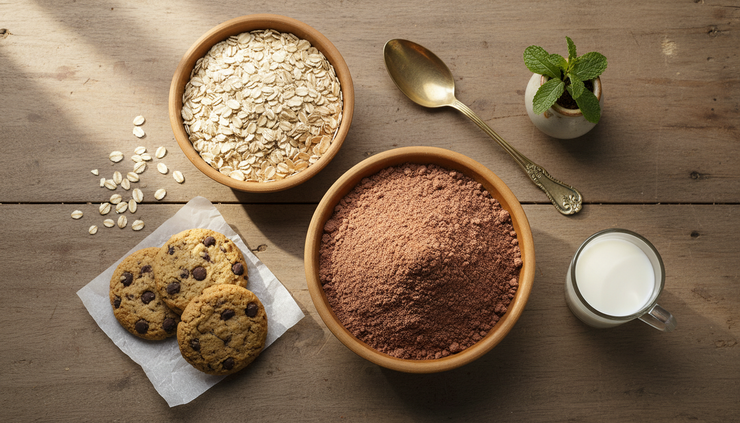
The nutrition numbers show clear strengths
The table below compares ragi, also called finger millet or nachni, with oats per 100 g. Values can differ slightly by variety, processing, and database. For ragi, the commonly cited Indian values come from ICMR/NIN food composition data. For oats, the values align with USDA FoodData Central for raw oats.
Nutrient per 100 g | Ragi or finger millet flour | Oats |
Calories | About 328 kcal | About 389 kcal |
Protein | About 7.3 g | About 16.9 g |
Calcium | 344 mg | 54 mg |
Fibre | About 3.6 g | About 10.6 g |
Ragi has 344 mg calcium per 100 g vs oats’ 54 mg. That is the biggest nutritional gap between the two.
Oats have more calories per 100 g, but they also bring more protein and fibre. Ragi brings far more calcium, which is why it has stayed important in many Indian diets, especially in Karnataka, Tamil Nadu, Maharashtra, Andhra Pradesh, Telangana, and parts of Odisha.
One small caution: fibre values may look different depending on whether a source reports crude fibre or total dietary fibre. The broad pattern still holds. Oats are known for fibre, especially beta-glucan, while ragi is known for minerals, especially calcium.
Ragi is a strong Indian grain for satiety and calcium
Ragi has a deep, earthy flavour and works well in Indian snacks because it pairs easily with jaggery, cardamom, nuts, sesame, coconut, and cocoa. It is also naturally gluten-free, though packaged snacks may not be gluten-free unless made in a gluten-free facility.
For weight loss, ragi can help in three practical ways.
It can make snacks feel more filling
Ragi has complex carbohydrates and fibre. When used in a balanced recipe, it can feel more satisfying than a refined flour biscuit. This matters because many snack calories in India come from “just two biscuits” several times a day.
A ragi-based snack with nuts, seeds, or a little protein can reduce the urge to keep eating. The trick is to check the full ingredient list, not just the grain name on the pack.
It supports calcium intake
Ragi’s calcium content is its biggest advantage. At about 344 mg per 100 g, it is much richer in calcium than oats. That can be useful in vegetarian diets, especially when milk, curd, paneer, or leafy greens are not eaten regularly.
This does not mean one should eat 100 g of ragi cookies in a sitting. It means ragi is a smart base grain when choosing snacks more often.
It fits Indian eating patterns
Ragi is not a “diet import”. It already belongs in Indian food. Ragi dosa, ragi mudde, ragi malt, ragi roti, and Ragi cookies can fit into familiar meal patterns. That makes consistency easier.
The best weight-loss snack is usually the one that is satisfying, portion-friendly, and easy to repeat without feeling punished.

Oats are strong for protein, fibre, and heart-friendly snacking
Oats have become popular in India because they are quick, neutral in taste, and easy to use in both sweet and savoury recipes. They work in porridge, chilla, upma, granola, smoothies, and cookies.
For weight loss, oats have their own clear strengths.
Oats bring more protein per 100 g
Oats contain about 16.9 g protein per 100 g, compared with about 7.3 g in ragi. That does not make oats a “high-protein food” by itself, but it does make oats useful in a snack base.
Protein matters during weight loss because it supports fullness and helps protect lean mass when overall calories come down.
Oats are rich in soluble fibre
Oats contain beta-glucan, a soluble fibre linked with better cholesterol management when eaten regularly as part of a balanced diet. It also helps slow digestion, which can support steadier hunger.
For Indian snackers, this is useful because tea-time snacks often combine refined carbs with sugar. Oats can improve the fibre profile if the recipe is well made.
Oats are flexible in sweet and savoury snacks
Oats can take on many flavours. Masala oats chivda, oats tikki, oats dosa, and Oats Cookies can all be made healthier when the recipe keeps sugar, oil, and refined flour in check.
The issue is that many packaged oats products are not as simple as oats plus spices. Some include added sugar, maltodextrin, refined flour, palm fat, or excess salt. Always read the label.
Ragi versus oats for weight loss in India
Weight loss does not come from one grain. It comes from an overall calorie deficit, enough protein, enough fibre, regular movement, and sleep. Still, grain choice can make snacking easier or harder.
Here is the practical comparison.
If your goal is | Better choice | Why it helps |
More calcium | Ragi | Ragi has much higher calcium than oats |
More protein | Oats | Oats have more protein per 100 g |
More fibre | Oats | Oats are richer in total fibre and beta-glucan |
Gluten-free grain base | Ragi | Ragi is naturally gluten-free |
Indian-style millet snacks | Ragi | Works well in traditional flavours |
Creamy breakfast or porridge | Oats | Cooks quickly and absorbs flavours well |
Lower-calorie base per 100 g | Ragi | Ragi is lower in calories than oats per 100 g |
For snackers, the better question is not only “ragi or oats?” It is also:
How much sugar is in the snack?
Is refined wheat flour the main ingredient?
Does it contain nuts, seeds, or protein?
Is the serving size realistic?
Will it keep you full till the next meal?
A good ragi or oats snack should not leave you hungry again in 20 minutes.

Which is healthier, ragi or oats
Both are healthy in different ways.
Choose ragi if calcium, millet diversity, gluten-free grains, or traditional Indian snacks matter most. Ragi is especially useful when the rest of the diet is low in calcium-rich foods.
Choose oats if protein, soluble fibre, and cholesterol-friendly eating are the bigger focus. Oats also work well when you want a quick breakfast that keeps you full.
For weight loss, oats may have a slight edge for fullness because they offer more protein and fibre per 100 g. Ragi may be a better fit when you want a calcium-rich Indian millet snack with a familiar taste.
The most balanced approach is to use both across the week. A ragi biscuit with tea one day, oats chilla the next morning, ragi dosa for dinner, and oats porridge on a busy day gives better variety than depending on one grain.
What is ragi flour good for
Ragi flour is good for more than cookies. It can be used in both everyday meals and planned snacks.
Good uses for ragi flour include:
Ragi dosa or chilla
Mix with curd, water, spices, onions, and herbs for a filling breakfast.
Ragi roti
Pair with curd, dal, chutney, or sabzi so the meal has protein and vegetables.
Ragi malt
Make it with milk or curd for a more filling drink. Keep sugar low.
Ragi pancakes
Add banana, egg or curd, and nuts for a snack-style breakfast.
Ragi cookies and biscuits
Choose versions with sensible sugar, real ingredients, and clear portion sizes.
Ragi laddoo
Use nuts, seeds, and limited jaggery. Treat it as an energy-dense snack, not a free food.
Ragi flour is especially useful when replacing part of refined flour. For example, a cookie made with ragi, nuts, and moderate sweetness is usually a better tea-time choice than a maida-heavy biscuit with lots of sugar.
How to choose better ragi and oats snacks
The front label may say “millet”, “oats”, “high fibre”, or “healthy”. The back label tells the real story.
Look for these signs:
Whole grain or millet listed near the top
Lower added sugar
No needlessly long ingredient list
Some nuts, seeds, or protein-rich ingredients
Clear serving size
No claim that sounds too good to be true
Be careful with these:
“Multigrain” snacks where maida is still the main ingredient
Very sweet cookies sold as health food
Oats snacks where sugar appears before oats
Large packs with tiny serving sizes on the nutrition label
“Diabetic-friendly” claims without careful nutrition details
If buying packaged snacks, compare per 100 g and per serving. Per 100 g helps compare brands. Per serving helps decide what you will actually eat with tea.
Prizi options for ragi and oats snackers
For a ragi-based snack, Prizi’s Plain Ragi Cookies are a simple place to start if you want a millet cookie for tea-time.
For oats-based options, browse Prizi’s oats snack range on the Prizi website and compare the ingredient lists before choosing. The best pick is the one that keeps the grain meaningful in the recipe while keeping sugar and portion size sensible.
FAQ
Which is healthier, ragi or oats?
Ragi is healthier for calcium. Oats are healthier for protein and fibre. For weight loss, oats can support fullness well, while ragi is a strong Indian millet choice when the recipe is not too sugary.
Is ragi good for weight loss?
Ragi can support weight loss when it replaces refined flour snacks and is eaten in controlled portions. It is not a magic fat-loss food. The full meal pattern still matters.
What is ragi flour good for?
Ragi flour is good for dosa, roti, malt, pancakes, laddoo, and cookies. It is useful when you want a calcium-rich, naturally gluten-free millet flour in Indian-style recipes.
Are oats better than biscuits for evening snacks?
Plain oats in porridge, chilla, or upma are usually more filling than regular sweet biscuits. Oats-based biscuits can also be a better choice if they are made with enough oats, less sugar, and sensible fat.
Can ragi and oats be eaten together?
Yes. Ragi and oats can be combined in cookies, pancakes, porridge, or snack bars. This gives you ragi’s calcium and oats’ fibre in the same recipe.

The smarter choice is variety with portion control
Ragi and oats both deserve space in an Indian weight-loss snack plan. Ragi gives excellent calcium and a familiar millet base. Oats give more protein, more fibre, and strong satiety. The winner depends on what your diet lacks and how the snack is made.
If calcium is the priority, choose ragi. If fullness and fibre are the priority, choose oats. If better snacking is the priority, rotate both and keep an eye on sugar, refined flour, and serving size.
For a simple millet-based tea-time option, try Prizi Plain Ragi Cookies and pair them with unsweetened tea, fruit, or a handful of nuts for a more balanced snack.


Comments